
Shrinking the Dark
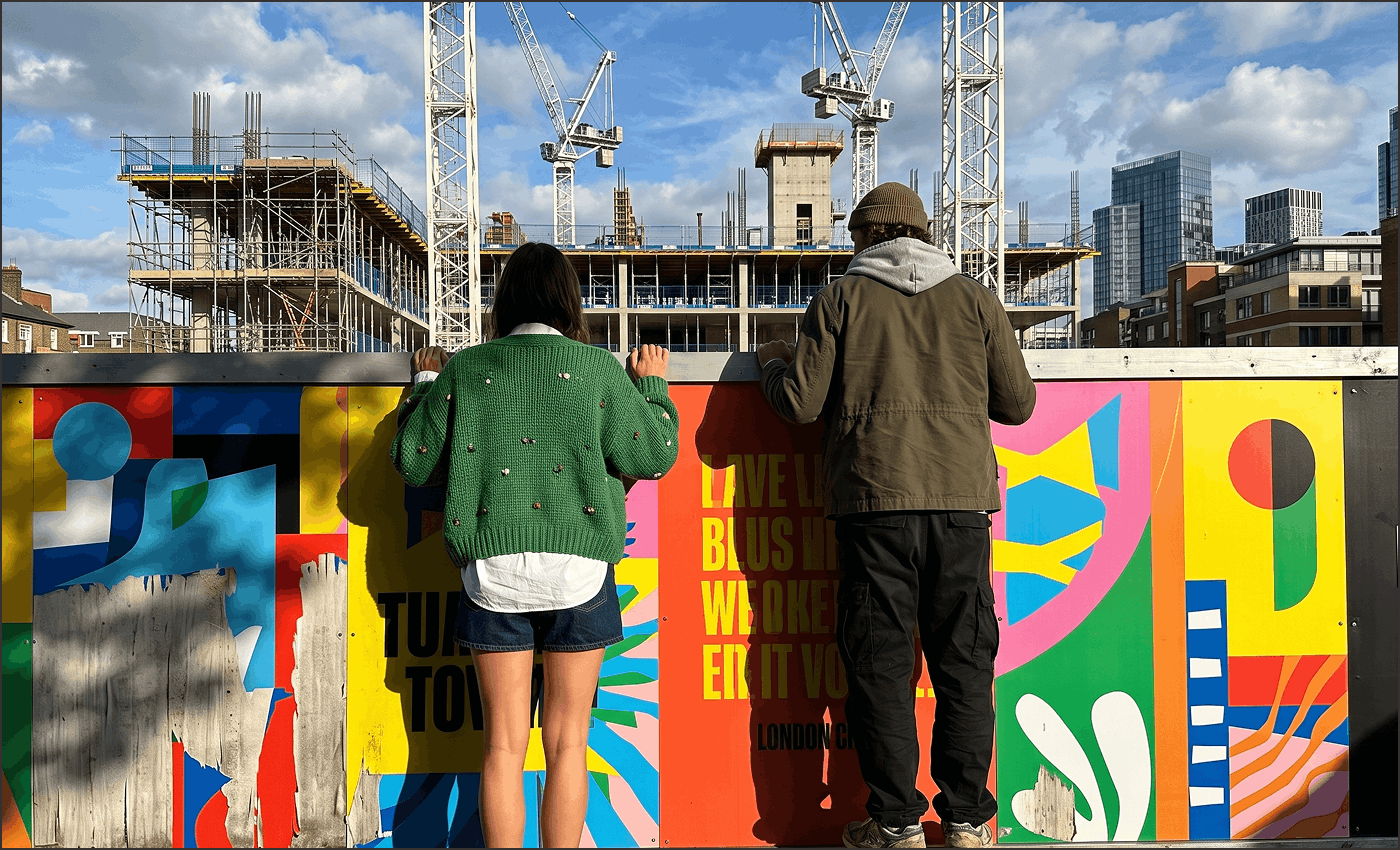
Donald Rumsfeld, the former US Secretary of Defense, gave strategic thinking one of its most enduring frameworks. He sorted threats into three kinds. There are the known-knowns, and the known-unknowns, the gaps we already know are there. Then there is the hardest and most dangerous kind of all, the unknown-unknowns, the things we do not even know we do not know.
Recent years are full of moments when entire systems were caught completely off guard because they had no idea where to look, often outside any security context at all. The collapse of Silicon Valley Bank in early 2023 stunned US regulators. Their risk models knew how to measure credit exposure, but they were blind to a combination no one had priced in, rapid interest rate hikes colliding with a digital bank run fueled by viral panic on social media. Their stress tests never imagined it. The Red Sea shipping crisis of 2023 and 2024 caught global supply chains the same way. Everyone knew the Houthis were in Yemen. What eluded the imagination of global shipping was that a local non-state actor could choke a critical trade route with swarms of cheap drones.
We now stand at the threshold of a different era. The evolution of artificial intelligence and large language models lets us, perhaps for the first time, shrink that blindness in a way that matters. A continuous dialogue between human and machine, with a machine that carries none of our cognitive biases or inherited assumptions, can surface issues, connections, and questions that were never in the analyst's field of view.
The unknown-unknown is not the private problem of intelligence professionals. In my years in intelligence I saw how easily it defeats even the most disciplined organizations, and the same trap sits at the doorstep of anyone whose job is to describe and analyze reality. The security officer raising a flag on a cyber threat. The political analyst reading election trends. The diplomat weighing the stability of a regime. The CEO trying to anticipate the next disruption to the market.
The roots of blindness: human cognition and the data trap
To grasp the scale of the challenge, we have to separate a specific error from systemic blindness. An assessment error, the classic known-unknown, happens when the analyst has identified the problem and gathered the data but assembles the puzzle incorrectly and reaches the wrong conclusion. Missing an event inside the unknown-unknown is a deeper failure. The question was never asked, and the whole system was blind to the arena's very existence. You cannot investigate what you do not know could exist.
The roots of that blindness run through our physiology and our psychology. The human brain struggles to picture a reality that breaks from familiar scripts, and it clings instinctively to the biases and paradigms that help it make sense of the world. Inside organizations, whether military intelligence, research institutes, government ministries, or corporate boardrooms, echo chambers form fast. Homogeneous thinking hardens, and heretical questions or far-fetched scenarios get dismissed before anyone examines them.
The paradox only deepens when we reach our data infrastructure. In theory, the era of big data should have handed us every answer. In practice, no one can collect and tag all the information in the world all the time, so our systems are built to answer the research questions we already know to ask. That necessary focus, the constant effort to filter out background noise, condemns us to a willful kind of blindness. The weak signal that points to something genuinely new gets erased as noise, simply because it matches none of the predefined tags. The result is a vicious cycle. The analyst does not see the information because the system was never told to collect it, and the system does not collect it because no analyst ever thought to ask.
The AI shift: cracking the unknown with multimodal open source
The breakthrough underway today sits at the intersection of AI's processing power and the explosion of information in the open-source domain. AI gives us a thinking partner unburdened by organizational ego, historical assumptions, or fatigue. And that engine is multiplied by the fuel now feeding it, the organic data of the crowd in the open-source world, what many now call OSINT 4.0.
Unlike official, text-based reporting, which always encodes a specific intent, social media offers a raw and unmediated picture of reality. A casual video carries endless layers of unintentional information. The body language of a crowd. The anomalous movement of goods in the background. A quiet change in civilian infrastructure.
This is where AI turns the chaos of open source into a weapon against blindness. Using computer vision and unsupervised learning, models can scan enormous volumes of data in real time, with no predefined question from the analyst.
The advantage grows for anyone who can fuse data across dimensions. Combine the visual richness of video with the audio layer, the background noise, a distant siren, a tone of voice that signals sentiment, and the text layer, the spontaneous comments and the sign caught in the background, and the picture becomes holistic and deep. AI detects the pattern breaks across those dimensions, surfaces the anomalies, and generates the lines of inquiry we never knew we needed.
From blindness to illumination
The pursuit of the unknown-unknown has always been the holy grail of leaders and strategists. For generations we accepted that vast stretches of reality were simply hidden from us, and that crisis was the natural price of human limitation. Today we stand at a real analytical turning point. An infinite, pulsating ocean of multimodal information from the crowd, paired with the analytical power of AI, is rewriting the rules and opening a genuine chance to reshape how much of reality we can actually see.
Before anyone declares victory, a measure of humility is in order. This shift is no magic wand, and reality will always be more complex than any model built to describe it. AI still hallucinates and invents false correlations, and the human steering it can still smuggle in their own hidden biases. There will always be black swans and concealed developments that slip through even the finest net. The unknown-unknown will never be fully eliminated.
And that is exactly where the promise lies. The goal was never perfection. It is a dramatic reduction of the blind spot. Our ability to chip away at the zones of total darkness, and move them into the light of the known, is a real leap in human capability. The challenge is no longer only about avoiding crises and defending against surprise. For the first time, we can turn meaningful parts of the unknown into space for opportunity, innovation, and the deliberate shaping of what comes next. This is a partnership. People bring judgment, empathy, and context, and the machine hands them something close to X-ray vision. We no longer have to grope in the dark and wait for the unexpected to hit. We finally have the tools to switch on the light, step past the horizon, and start to map the dark.
I will be at ISS World Singapore in September and ISS World Dubai in October, digging into the unknown-unknown and how AI and open-source intelligence are pushing back its boundaries. If you will be there, I would love to meet.

Related stories
.png)
.png)
.png)