
How to Measure Brand Perception in Social Video
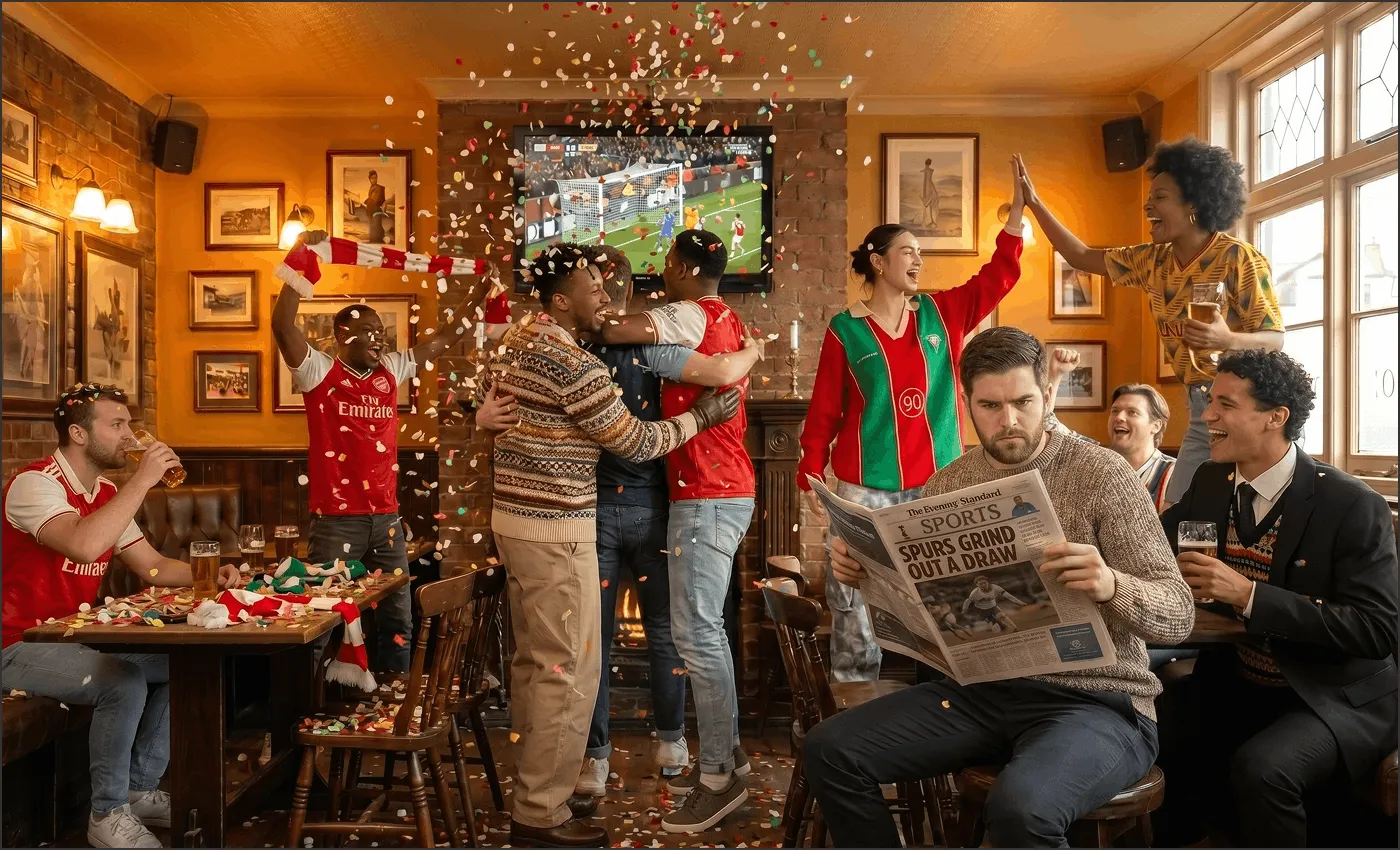
Most brands are still measuring perception with tools built before TikTok existed, and it shows. The result is a dashboard full of green numbers and a comms team blindsided every other week by a creator video they never saw coming.
Brand perception in social video is measurable, but the work needs four signals running together, sentiment inside the video frame, the narratives forming across creator clusters, share of voice weighted by who's actually carrying it, and whether the spike you're looking at is real or engineered. Text-only social listening catches none of the first three. On the fourth, it has no opinion at all.
The gap between what a brand intends and what audiences believe is wider in 2026 than it has been at any point in the last decade, because the channel where perception now forms, short-form social video, is the channel most monitoring stacks were never built to read.
What you'll learn
- Why positioning and perception are not the same thing, and why the gap between them is the only metric worth defending
- What text-only social listening structurally misses inside the video frame
- The four dimensions of perception measurement in social video, and how they stack
- How to separate organic audience reaction from coordinated activity, and why mixing them up leads to expensive mistakes
- How video intelligence closes the gap that legacy tools leave open
What is brand perception measurement?
Brand perception measurement is the work of putting numbers on a story you don't control. The brand has a positioning, an internal, intentional statement about category, audience and promise. The audience has a perception, which forms across thousands of small interactions, mostly outside the brand's view. Measurement is the practice of comparing the two and tracking how the gap is moving.
In a social intelligence context, the practice has to use signals across video, image, audio and text, not just survey data and brand-tracker reports. A brand-tracker tells you what a panel of 800 respondents thought last quarter, social tells you what 8 million people are reacting to right now, including the parts of your brand you'd rather not see discussed, which is what social video reveals that surveys and focus groups can't.
The difference between brand positioning and brand perception
Positioning is the story you tell about yourself. Perception is the story your audience tells about you. The first is intentional and the second is emergent, and the second is the one that drives growth or decline.
You can position a brand as premium, sustainable, and trustworthy. Your audience can perceive the same brand as overpriced, performatively green and a little corporate. Every dollar of ad spend reinforces the first story. Every creator review reinforces the second. If you're only measuring positioning, you're not seeing the part that actually moves the market, and that is the brand test most marketers miss.
Why social video is now the primary perception channel
Perception used to form across press, ads, customer service and word of mouth, on a timeline of months. Now it forms across short-form video on a timeline of hours, and that's not a small shift. A 47-second creator clip can move perception faster than a six-month campaign, and a reaction thread under a launch video can lock in a narrative before the comms team has finished its first review meeting.
The shift sits on a few things at once. Attention has concentrated on short-form video across age groups and product categories, and creator credibility has outpaced brand credibility for most consumer verticals, especially with audiences under 35. The bigger force is what's happening inside the video itself. Meaning now lives in the edits, the audio choices, the stitches and duets, the overlays, and that's the layer text-only social listening can't read. Perception is forming in the part of the stack most tools stop at.
What do text-only tools miss in social video?
Brandwatch, Sprout Social, Meltwater and Talkwalker were all built on text indexing. They count mentions, hashtags and comment volume, but they can't decode what's actually being said, shown or felt inside a video frame, which is the job of in-video analysis. Not won't, can't. A creator video that never says the brand name out loud is, as far as those tools are concerned, not about your brand at all, even when it has 14 million views and has shifted the conversation in your category. None of that enters the dashboard.
Six perception signals live exclusively inside video. None of them survive a text-only pipeline.
- Visual brand context. Logos in frame, products on shelf, on-screen overlays, competitor placements in the background of someone else's video. Perception forms from what audiences see, not just what's captioned.
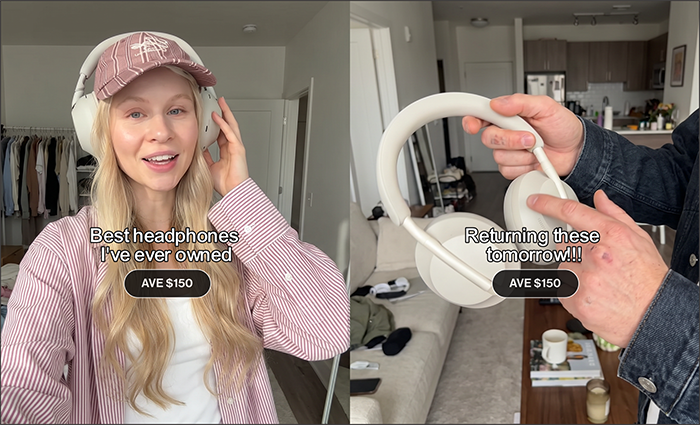
- Creator tone. Sarcasm, dry critique, sincere endorsement, a tutorial showing the product failing. The meaning sits in the face and the delivery, and text reads the surface words and calls it positive.
- Reactions inside comments, stitches, and duets. The remix layer often contradicts the creator's surface message, and that contradiction is usually where the real perception lives.
- Audio cues and trending sounds. A sarcastic audio dropped over a sincere product clip flips the meaning of the entire video. No transcript captures it.
- Comment-section behavior. Whether viewers defend, mock, fact-check or amplify the creator. Text tools count engagement, they don't read what kind of engagement it is.
- Authenticity signals. Whether the surge is real audience reaction, a coordinated push, or a bot network. Most text platforms have no layer for this question at all.
A monitoring stack that doesn't read those six is, by structural design, blind to most of where perception is forming. Which would be fine if perception was forming somewhere else. It isn't.
The 4 dimensions of the perception gap in social video
Brand perception in social video comes down to four dimensions. Each one is a specific kind of gap between what you intend and what your audience believes.
The dimensions stack on each other. Sentiment tells you what's being felt, narrative tells you the story those feelings are pointing at, share of voice tells you how loud the brand is inside that conversation, and authenticity tells you whether any of it is real. Skip one and you're working from a partial picture, and the truth is most teams are skipping three.
See what your audience actually thinks about your brand in video.
How to measure brand perception in social video
Five steps. Baseline, sentiment, narrative, authenticity, gap-over-time.
- Set your baseline. Write your intended positioning in one sentence. Then write what the audience actually believes about you across the four dimensions. The delta between the two is the thing you're tracking.
- Track sentiment inside video content. Stop scoring captions. The interesting signal lives inside the clip, across verbal, acoustic and visual layers. Fuse them. Aggregate by topic, audience segment, and creator tier. Watch for divergence between segment-level sentiment and the positioning you've been spending money to reinforce. The divergence is the gap.
- Map narrative clusters. Group reactions by the story being told, not the keyword being used. Track which narratives are growing, which are fading, and which are leaking into adjacent communities you weren't watching.
- Run authenticity checks. Every perception spike gets three forensic passes, actor analysis, content authenticity scoring, engagement-velocity validation. If a spike fails the checks, it's not the same data point as a real reaction.
- Track the gap over time. Re-baseline at a cadence that fits your risk surface. Some brands need weekly, most need monthly. The trend in the gap is the metric to defend, a single sentiment score on its own is just a vibe.
What the data shows: sentiment tracking and share of voice
Sentiment and share of voice are the two numbers most teams already collect. The work is making them video-native and authenticity-aware.
For sentiment, score what's happening inside the video, not the caption and comment thread wrapped around it. Apply multimodal scoring so sarcasm doesn't get logged as positive sentiment. Then watch for segment-level divergence, a brand that scores +0.4 in aggregate can be deeply underwater with the audience it was actually trying to reach.
For share of voice, weight by the authenticated reach of the creators carrying the conversation, not raw mention volume. 30% share of voice driven by one creator with a hostile narrative is not the same brand position as 30% share spread across 80 neutral or positive accounts. Same number, different reality.
What the data can't tell you alone: narrative mapping and creator intent
Numbers tell you something is happening. They don't tell you what story is forming underneath.
Narrative mapping is the qualitative layer that answers the why. It clusters reactions into the dominant stories your audience is telling, ranks them by velocity and reach, and traces each one back to the creators and communities driving it. When sentiment shifts, narrative mapping is what tells your team whether the shift came from a real product issue, a cultural moment, a creator's framing, or a coordinated push.
Creator intent matters here too. The same product clip from an aligned creator, a neutral reviewer and a critic produces similar mention volume and similar engagement numbers, but the narrative formed in each case is different, and the response should be too. If your tool can't tell those three videos apart, you're flying blind on the most important decision in the loop.
Authenticity signals: organic vs. engineered momentum
The most consequential dimension of perception measurement in 2026 is whether what you're seeing is real.
Coordinated narrative attacks, bot networks, synthetic media and paid amplification can produce sentiment surges that look identical to organic reaction on the surface. Act on what you're reading at the surface and the wrong decisions follow, you counter a critique that no real person is making, or you pour spend into a positive narrative that turns out to be paid amplification, while the dashboard glows green and your standing in the category quietly erodes. It's the kind of mistake you don't see from the inside, which is the worst kind.
Ubisoft is the clearest recent example of catching it early. After detecting a coordinated narrative attack fueled by bots and fake engagement against its social video footprint, the company's share-price trend shifted from a 66% decline over the prior 12 months to a 29.7% gain over the following 6. The intervention wasn't a louder counter-campaign. It was the authenticity layer telling the team which narrative was real and which was engineered, so the response went to the right target. Which is a less dramatic story than a counter-campaign would have told, and a more useful one.
Three checks close the authenticity gap. Actor analysis looks at account creation patterns, posting cadence and network structure, content authenticity scoring flags deepfakes, synthetic media and AI-generated content patterns, and engagement-velocity validation compares the spread curve against what organic behavior actually produces. When all three point at coordination, you have an engineered narrative on your hands, and the response path changes.
From measurement to closing the gap
Measurement is half the work. Closing the gap is matching the response to the kind of gap you've detected, and that's where the RESPOND framework sits, the structure that helps teams turn the measurement into a response.
RESPOND structures the operational response into four paths. You Monitor when traction is low enough that engaging would amplify the signal, and you Counter when silence is being read as confirmation and accurate information from credible voices needs to step into the gap. You Promote when the original narrative is contestable on substance and a competing positive story can reframe attention, and you Take Down when the content is fabricated or infringing and platform policy or legal escalation is the right route.
The path that fits depends on which dimension of the gap is widening, and whether the momentum behind it is real or engineered. A sentiment gap driven by genuine product feedback calls for Counter or Promote, while the same-looking sentiment gap driven by a bot network calls for Take Down or Monitor. The measurement framework feeds the decision and RESPOND structures the action. dig operationalizes the loop, so detection, evaluation and response live in the same place.
How does dig close the measurement gap other tools leave open?
dig is the social video intelligence platform built for this. The platform analyzes 750M+ posts monthly with 95% accuracy across speech-to-text and 100% source traceability on every insight, so every read links back to the exact video, frame and account driving it.
Multimodal sentiment fuses verbal, acoustic and visual signals on every video where the brand might appear, including videos that never use the brand name out loud. Narrative clustering surfaces the dominant stories forming across creator communities, ranked by velocity and reach. Authenticated share-of-voice weights the conversation by creator credibility and audience composition, not raw volume. Authenticity forensics flag deepfakes, coordinated inauthentic behavior, and synthetic amplification on every perception spike. When the four dimensions move together, dig surfaces the story underneath, with the response path mapped through the RESPOND framework so your team is moving on intelligence instead of a guess.
dig is used by global brands, government agencies and research teams across consumer goods, financial services, public sector, sports and entertainment, including organizations measuring brand perception across hundreds of millions of social video data points each month.
Don't just monitor the feed. Understand the narratives shaping inside it.
Key takeaways
- Positioning is not perception. The gap between the two is the metric worth tracking.
- Perception now forms inside social video, and that's the layer most legacy tools cannot read.
- Four signals matter together, sentiment, narrative, share of voice and authenticity. Skip one and the read is partial.
- A spike driven by bots is not the same data point as a spike driven by real audience reaction. Act on the difference.
- Closing the gap means matching the response to the kind of gap you've detected. RESPOND structures the call.
- Video intelligence gives brands the measurement layer text-only platforms can't fake.
Summary
The brands leading their categories in 2026 will be the ones measuring perception where it's actually forming, on signal they've authenticated. Text-only social listening was the right tool for a different internet. Video intelligence is the tool for the one we're in, and the gap between the two is only going to get wider.
Stop guessing what your audiences think. Start measuring what they actually believe.
See how dig surfaces brand perception signals from social video, with evidence your team can act on.
FAQs
What is the difference between brand positioning and brand perception?
Positioning is the story a brand tells about itself, the category, audience and promise. Perception is the story audiences actually believe, formed across thousands of interactions and reactions the brand doesn't control. The first is intentional and the second is emergent, and the gap between them is the most useful metric a brand can track, because that's where growth or decline is actually happening.
How do you measure brand perception in social video?
It comes down to five steps. You start with a baseline that captures the intended positioning and the current perception across the four dimensions, then track sentiment inside video content using multimodal scoring rather than caption text alone, map narrative clusters to surface the stories audiences are telling instead of the keywords they're using, measure authenticity to separate organic reaction from engineered momentum, and track the gap over time, re-baselining at a cadence that fits the brand's risk surface.
Why do traditional social listening tools miss brand perception signals in video content?
Brandwatch, Sprout Social, Meltwater and Talkwalker are built on text indexing. They count mentions, hashtags and comment volume. They cannot decode what's said, shown or felt inside a video frame. A creator video that never says the brand name out loud is invisible to text-only tools, even if it pulls millions of views and reshapes the conversation in your category. The signals driving perception in 2026, visual context, creator tone, comment-thread behavior, audio cues, authenticity of momentum, are video-native and outside what text-only pipelines can read.
What is sentiment tracking for social media, and how does it apply to brand perception measurement?
Sentiment tracking is the practice of scoring audience emotion across social platforms. For brand perception, it tells you whether audiences feel positive, negative or neutral about the brand at a given moment. The version that matters now is video-native and multimodal, scored from verbal, acoustic and visual signals fused together, not from caption text alone. Multimodal sentiment catches sarcasm, irony and visual context that text sentiment misses. That's what makes it useful for tracking the perception gap rather than the surface vocabulary.
How can brands tell whether a perception shift is organic or engineered?
Three forensic checks. Actor analysis examines account creation dates, posting patterns and network structure for signs of coordination, content authenticity scoring flags deepfakes, synthetic media and AI-generated content patterns, and engagement-velocity validation compares the actual spread curve against the baseline for what organic behavior produces. When all three point at coordination rather than real audience reaction, the spike is treated as engineered and the response path shifts. Acting on inauthentic signals produces wrong decisions, which is why the authenticity layer is the most consequential dimension of perception measurement right now.

Related stories

.png)